The Absence of Work
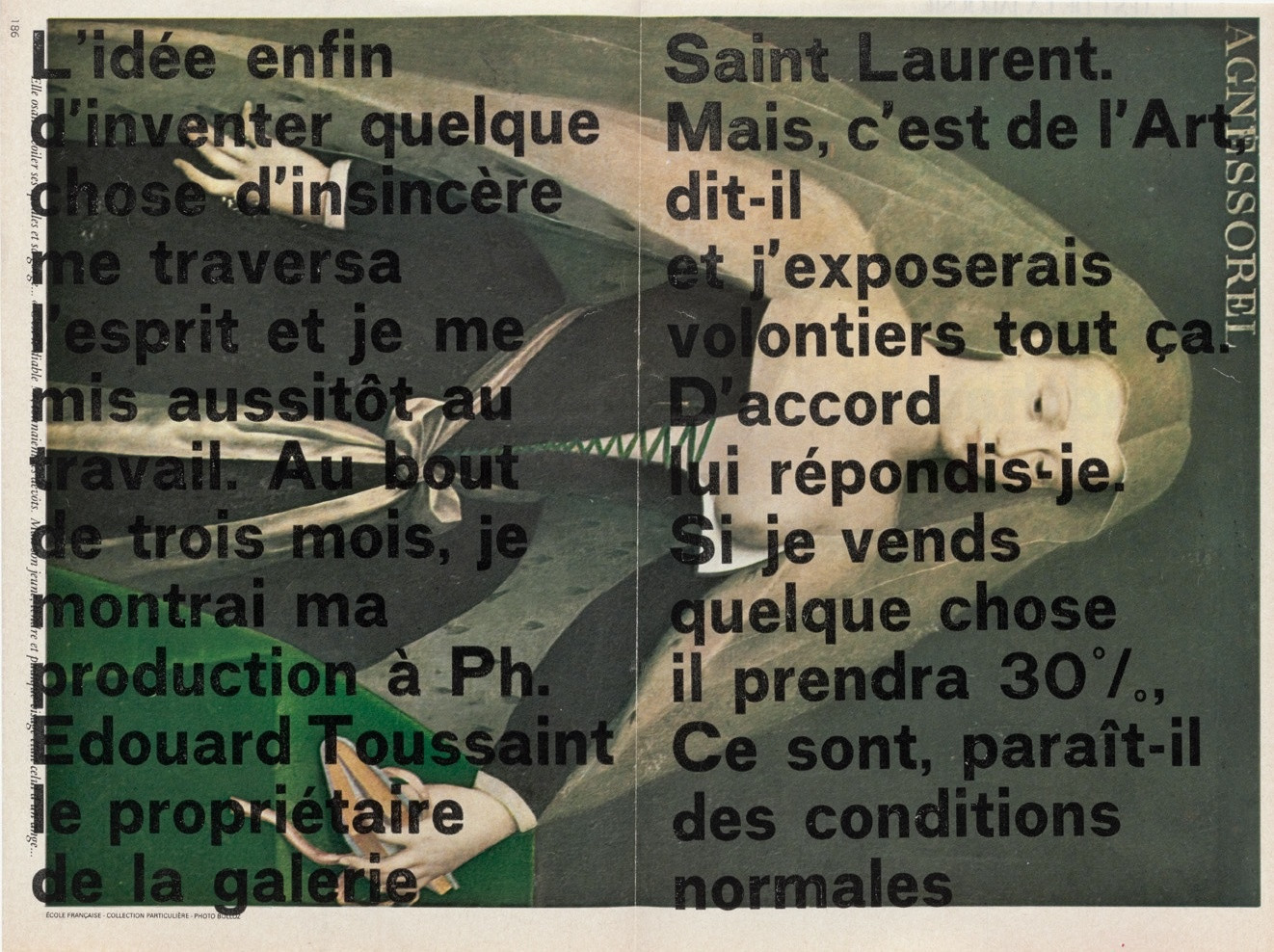
The Absence of Work, Marcel Broodthaers, 1964–1976
by Rachel Haidu
––––––––––––
A provocative investigation of Marcel Broodthaers's work as a reflection on the uses and abuses of language. In 1964, at age forty, Marcel Broodthaers (1924–1976) proclaimed that his years of writing poetry—of being “good for nothing,” in his words—were over, and a brief but dazzling artistic career began. Considered a founding father of institutional critique, Broodthaers created hundreds of objects, books, films, photographs and exhibitions, including a “fictive” museum of modern art that evolved from an installation in his own home to a massive exhibition of over three hundred works representing eagles. In The Absence of Work, Rachel Haidu argues that all of Broodthaers's art is defined by its relationship to language. His perception of his poetry's “failure to communicate” led him to explore in his art the noncommunicative, nontransparent uses of words.
Meditations in an Emergency
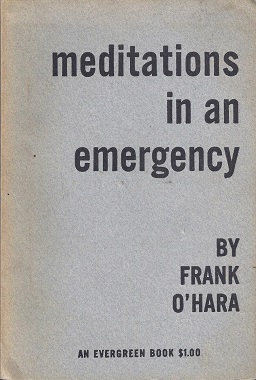
Mayakovsky. Meditations in an Emergency
by Frank O'hara
––––––––––––
Now I am quietly waiting for the catastrophe of my personality to seem beautiful again, and interesting, and modern.
The country is grey and brown and white in trees, snows and skies of laughter always diminishing, less funny not just darker, not just grey.
It may be the coldest day of the year, what does he think of that? I mean, what do I? And if I do, perhaps I am myself again.
Return to Tipasa

Return to Tipasa
by Albert Camus
––––––––––––
At noon on the half-sandy slopes covered with heliotropes like a foam left by the furious waves of the last few days as they withdrew, I watched the sea barely swelling at that hour with an exhausted motion, and I satisfied the two thirsts one cannot long neglect without drying up--I mean loving and admiring. For there is merely bad luck in not being loved; there is misfortune in not loving. All of us, today, are dying of this misfortune. For violence and hatred dry up the heart itself; the long fight for justice exhausts the love that nevertheless gave birth to it. In the clamor in which we live, love is impossible and justice does not suffice. This is why Europe hates daylight and is only able to set injustice up against injustice. But in order to keep justice from shriveling up like a beautiful orange fruit containing nothing but a bitter, dry pulp, I discovered once more at Tipasa that one must keep intact in oneself a freshness, a cool wellspring of joy, love the day that escapes injustice, and return to combat having won that light. Here I recaptured the former beauty, a young sky, and I measured my luck, realizing at last that in the worst years of our madness the memory of that sky had never left me. This was what in the end had kept me from despairing. I had always known that the ruins of Tipasa were younger than our new constructions or our bomb damage. There the world began over again every day in an ever new light. O light! This is the cry of all the characters of ancient drama brought face to face with their fate. This last resort was ours, too, and I knew it now. In the middle of winter I at last discovered that there was in me an invincible summer.
The Sessions
The Sessions
by Experimental Jetset
––––––––––––
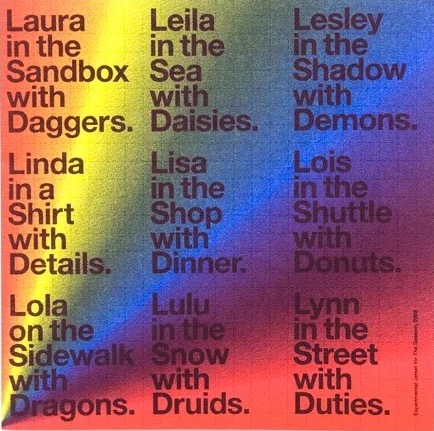
The short haiku-like verses on the sheet were obviously inspired by the Beatles' song 'Lucy in the Sky with Diamonds'. It's a song title of which the acronym famously spells 'LSD' (although, according to Lennon, this was just a coincidence). Our idea was to generate a whole library of titles like this, each sentence featuring a girl's name starting with the letter L, a location starting with the letter S, and an accessory starting with the letter D. We actually wrote hundreds of these sentences, as our first idea was to give each stamp on the sheet its own sentence. However, we quickly realized that the print would become too small if we would actually do that. So we eventually decided to only show a selection of nine sentences. This whole concept, the wordplay with acronyms, is in fact something that has always fascinated us tremendously, and it shows in our work; see for example 2004's SMCS / Stairwell and 2005's Love Aktion Machine.
Regarding the LSD theme: it's interesting that we actually don't use drugs at all (apart from very modest amounts of nicotine and alcohol). In fact, Danny, being completely straight edge, doesn't even smoke or drink, and never has. But despite being drugs-free, all three of us are quite obsessed with the aesthetic language of Sixties psychedelia. In a lot of our work we try to situate the psychedelic experience in a modernist context, an attempt that some might see as paradoxical, but we think it is far from that. It all boils down to this Marxist notion of 'the liberation of senses' (or, in Marx' exact words, "the complete emancipation of all human senses and qualities"). It is there where psychedelia and modernism meet.
Suddenly This Overview
Suddenly This Overview
by Peter Fischli and David Weiss
––––––––––––
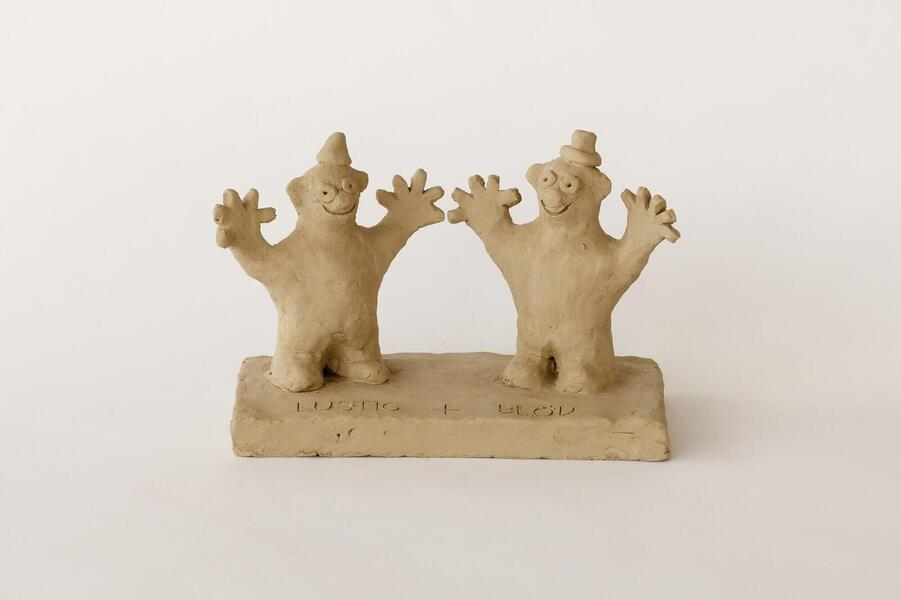
In 1981, Fischli and Weiss began their first sculptural series, a group of objects called Suddenly This Overview, with which they would seek to inventory the whole of human history and knowledge, no matter how significant or trite. To realize this impossible scheme, they turned to the unglamorous medium of unfired clay, a popular craft material rarely used in the realm of fine art. For Fischli and Weiss, clay was perfectly suited to making quick three-dimensional sketches that they could hand-mold and easily revise.
The resulting tableaux, which the artists called a “subjective encyclopedia,” include an idiosyncratic selection of scenes, ranging from mythic events, like the parting of the Red Sea, to trivial moments, like waiting for an elevator. Fischli and Weiss accompanied each object with a title that often functions like a punch line or a caption. For instance: Mr. and Mrs. Einstein Shortly after the Conception of their Son, the Genius Albert; or Mick Jagger and Brian Jones Going Home Satisfied after Composing “I Can’t Get No Satisfaction.” Titles such as these provide another layer of content not evident when viewing the sculptures alone.
Other pieces in the series pick up on the artists’ favored idea of “popular opposites,” illustrating and ultimately questioning conventional pairs of contrasting ideas. In Small and Big, for example, they molded a mouse and an elephant at equal size. Another work, called High and Low, features two little dogs, one standing on its hind legs, the other on all fours. Such juxtapositions wittily subvert the false dichotomies that Fischli and Weiss identified as central to popular philosophy, asking viewers to rethink their most basic assumptions about everyday life.
Following their first gallery presentation in 1981, Fischli and Weiss continued to expand the encyclopedic scope of Suddenly This Overview, creating over six hundred objects over more than thirty years. Gathered together in large groups like the one on view here, the project gives an accurate, if eccentric, depiction of the incomprehensible profusion and variety of events and ideas that shape the world.
The Atlas Group
The Atlas Group
by Walid Raad
––––––––––––
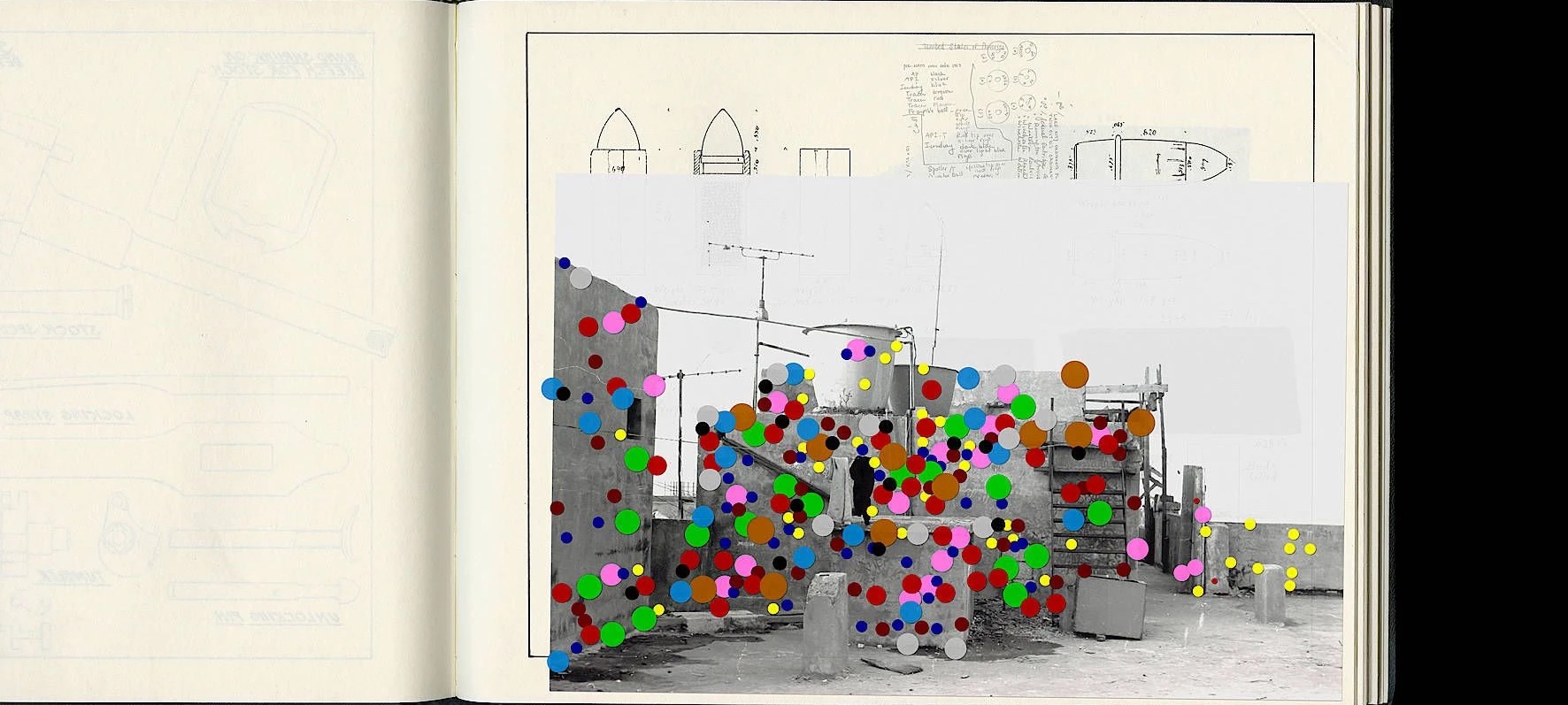
“I wouldn’t give up the term ‘alternative history,’” adds Raad. “But not an alternative history that is necessarily additional or that must be thought of as something that completes something that was missing. It might contradict, it might just add temporarily and then disappear… A reductive notion of traditional history is written as a chronology of massacres, of events, or a biography of participants. We are not saying history should not include this. We are certainly saying that history cannot be reduced to this… We are trying to find those stories that people tend to believe, [that] acquire their attention in a fundamental way, even if they have nothing to do with what really happened. Traditional history tends to concentrate on what really happened, as if it’s out there in the world, and it tends to be the history of conscious events. Most people’s experience of these events … is predominantly unconscious and concentrates on facts, objects, experiences, and feelings that leave traces and should be collected.” Those traces, in essence, are the Atlas Group’s archive.
The Magnificent Migration

The Magnificent Migration of Monarch Butterflies
by Josie Knuth
––––––––––––
No migration compares to that of the small, black and orange creature you see fluttering through your neighborhood in summer.
When you think about migration, you might describe how birds fly south for the winter and return when temperatures warm up again. For a monarch, migration is much more complex and requires multiple generations to complete its journey, including one very special generation known as the super generation.
The monarch is the only butterfly known to make a two-way migration like birds typically do. Monarch larvae, pupae, and adults can’t survive cold temperatures so they fly as far as 3,000 miles to reach a habitable climate for the winter months.